Leader's Digest
Reducing the carbon-footprint of last-mile delivery
Published: Jan 31, 2024
5 Min Read
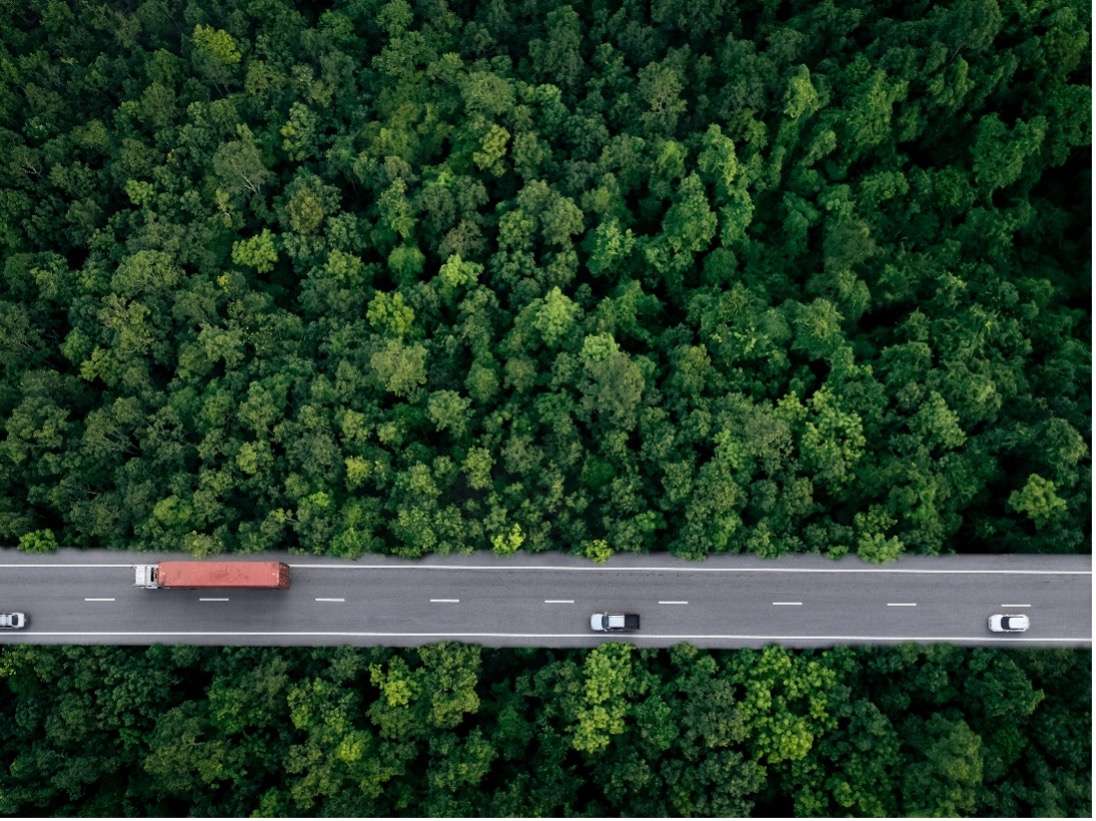
Last month, we discussed the top critical logistical challenges facing B2B organisations, and one challenge that particularly resonated was the growing concerns around reducing the carbon footprint of delivery operations. As sustainability becomes a key focus, businesses are under mounting pressure to minimise their environmental impact while still maintaining operational efficiency.
With heightened demands from both customers and regulators for eco-friendly practices and enhanced climate-related reporting, B2B companies must find innovative ways to reduce their emissions. In this blog, we will dive deeper into the issue, exploring practical strategies for reducing the carbon footprint of delivery operations, particularly in the last-mile.
The rising concern of carbon-emissions in logistics
The emphasis on carbon emissions in logistics operations, particularly in B2B industries, has grown rapidly in recent years. Several key factors are driving this heightened focus on reducing emissions:
1) Customer expectations for sustainability:
In the B2B sector, sustainability is no longer just a preference – it’s often a formal requirement in the tender process. To secure new business and maintain strong relationships, companies must be able to provide detailed reports to demonstrate their efforts in reducing their carbon footprint.
2) Regulatory pressure & compliance:
Governments and regulatory bodies are tightening emissions standards and pushing businesses to adopt greener practices. In many regions, including Australia, there are stricter carbon emissions reporting requirements, which demand that companies provide transparent reporting of their environmental impact.
3) The environmental impact of last-mile delivery:
Last-mile delivery is notorious for being one of the most emissions-intensive stages of the supply chain. The final leg, which often involves multiple stops in urban areas, contributes disproportionately to overall logistics-related emissions and therefore is a key focus area when discussing carbon footprint.
In light of these factors, it’s clear why B2B industries are placing a stronger emphasis on reducing carbon emissions within their logistics operations. As sustainability becomes a priority for customers, businesses and regulators, companies must find ways to deliver more efficiently while minimising their environmental impact.
In light of these factors, it’s clear why B2B industries are placing a stronger emphasis on reducing carbon emissions within their logistics operations. As sustainability becomes a priority for customers, businesses and regulators, companies must find ways to deliver more efficiently while minimising their environmental impact.
Strategies to reduce your supply chain’s carbon-footprint
1) Route optimisation
One of the most impactful ways to cut emissions is by optimising delivery routes. Modern technology can determine the most efficient paths for drivers, minimising the distance travelled and reducing fuel consumption.
2) Minimising failed deliveries
Failed delivery attempts lead to repeated trips, which waste fuel, increase emissions and increases operational costs. By implementing strategies such as enhanced communication with customers, real-time tracking, and flexible delivery bookings, companies can ensure that more deliveries are successful on the first attempt.
3) Maximising vehicle capability
Ensuring that vehicles are fully loaded and operating at maximum capacity reduces the number of trips needed to complete deliveries.
4) Data visibility
Having real-time data visibility into the entire delivery operation can help identify inefficiencies that contribute to excess emissions. By using modern technologies, companies can track everything from vehicle usage to route effectiveness and delivery times. This data can then be used to make informed decisions that reduce idle time, avoid unnecessary trips, and optimise overall fleet efficiency.
5) Electric vehicles (EVs)
Adopting electric vehicles for last-mile delivery in urban areas is one of the most direct ways to cut emissions. EVs produce zero exhaust-based emissions, and with charging infrastructure expanding in Australia’s major cities, EVs are becoming a viable option for reducing the carbon footprint for urban deliveries.
How Radaro can help reduce your carbon footprint
As a leader in last-mile delivery solutions, Radaro is uniquely equipped to help you address the sustainability challenges of modern logistics operations. Here’s how our delivery management software can assist:
1) Advanced analytics (including ESG reporting)
As mentioned above, there are a range of factors contributing to your carbon footprint. With advanced analytics capabilities, Radaro provides valuable data points to help improve operations, such as:
Driver performance metrics (dwell time, adherence to planned route)
Distance travelled
Emissions per vehicle
2) Real time tracking & visibility
Real time tracking not only aids in managing driver performance but also offers precise details on kilometres travelled. This data is essential for both ESG reporting and evaluating a shift to EVs.
3) Route & load capacity planning
While many view route planning as merely arranging the most efficient order for drivers to complete their deliveries, this perspective overlooks crucial factors that can significantly enhance fleet utilisation and reduce operational costs.
Effective delivery planning also needs to consider:
Vehicle Capacity
Driver Start and End points
Driver Schedules/Shifts
Driver Capabilities & Skills,
and the Service time required for each delivery
Radaro route planning takes all these points into consideration allowing you to maximise fleet utilisation.
4) Improved customer & driver communication to minimise failed deliveries
With repeat deliveries costing business in the vicinity of $US200,000 per year, reducing failed deliveries not only helps the bottom line, but also reduces your environmental impact.
Address errors and clients not being home are the two largest causes of failed deliveries. By improving communications with customers can drastically enhance success rates.
Reducing the carbon footprint of last-mile delivery is not just a regulatory necessity; it’s a strategic advantage in today’s market.
If you’re interested in learning more about how Radaro’s delivery management software can streamline operations and minimise your carbon footprint, contact us here or via email at support@radaro.com.au.
Subscribe to our Newsletter


Get Started with Radaro
Last mile delivery software designed for complex, real-world logistics.

Last month, we discussed the top critical logistical challenges facing B2B organisations, and one challenge that particularly resonated was the growing concerns around reducing the carbon footprint of delivery operations. As sustainability becomes a key focus, businesses are under mounting pressure to minimise their environmental impact while still maintaining operational efficiency.
With heightened demands from both customers and regulators for eco-friendly practices and enhanced climate-related reporting, B2B companies must find innovative ways to reduce their emissions. In this blog, we will dive deeper into the issue, exploring practical strategies for reducing the carbon footprint of delivery operations, particularly in the last-mile.
The rising concern of carbon-emissions in logistics
The emphasis on carbon emissions in logistics operations, particularly in B2B industries, has grown rapidly in recent years. Several key factors are driving this heightened focus on reducing emissions:
1) Customer expectations for sustainability:
In the B2B sector, sustainability is no longer just a preference – it’s often a formal requirement in the tender process. To secure new business and maintain strong relationships, companies must be able to provide detailed reports to demonstrate their efforts in reducing their carbon footprint.
2) Regulatory pressure & compliance:
Governments and regulatory bodies are tightening emissions standards and pushing businesses to adopt greener practices. In many regions, including Australia, there are stricter carbon emissions reporting requirements, which demand that companies provide transparent reporting of their environmental impact.
3) The environmental impact of last-mile delivery:
Last-mile delivery is notorious for being one of the most emissions-intensive stages of the supply chain. The final leg, which often involves multiple stops in urban areas, contributes disproportionately to overall logistics-related emissions and therefore is a key focus area when discussing carbon footprint.
In light of these factors, it’s clear why B2B industries are placing a stronger emphasis on reducing carbon emissions within their logistics operations. As sustainability becomes a priority for customers, businesses and regulators, companies must find ways to deliver more efficiently while minimising their environmental impact.
In light of these factors, it’s clear why B2B industries are placing a stronger emphasis on reducing carbon emissions within their logistics operations. As sustainability becomes a priority for customers, businesses and regulators, companies must find ways to deliver more efficiently while minimising their environmental impact.
Strategies to reduce your supply chain’s carbon-footprint
1) Route optimisation
One of the most impactful ways to cut emissions is by optimising delivery routes. Modern technology can determine the most efficient paths for drivers, minimising the distance travelled and reducing fuel consumption.
2) Minimising failed deliveries
Failed delivery attempts lead to repeated trips, which waste fuel, increase emissions and increases operational costs. By implementing strategies such as enhanced communication with customers, real-time tracking, and flexible delivery bookings, companies can ensure that more deliveries are successful on the first attempt.
3) Maximising vehicle capability
Ensuring that vehicles are fully loaded and operating at maximum capacity reduces the number of trips needed to complete deliveries.
4) Data visibility
Having real-time data visibility into the entire delivery operation can help identify inefficiencies that contribute to excess emissions. By using modern technologies, companies can track everything from vehicle usage to route effectiveness and delivery times. This data can then be used to make informed decisions that reduce idle time, avoid unnecessary trips, and optimise overall fleet efficiency.
5) Electric vehicles (EVs)
Adopting electric vehicles for last-mile delivery in urban areas is one of the most direct ways to cut emissions. EVs produce zero exhaust-based emissions, and with charging infrastructure expanding in Australia’s major cities, EVs are becoming a viable option for reducing the carbon footprint for urban deliveries.
How Radaro can help reduce your carbon footprint
As a leader in last-mile delivery solutions, Radaro is uniquely equipped to help you address the sustainability challenges of modern logistics operations. Here’s how our delivery management software can assist:
1) Advanced analytics (including ESG reporting)
As mentioned above, there are a range of factors contributing to your carbon footprint. With advanced analytics capabilities, Radaro provides valuable data points to help improve operations, such as:
Driver performance metrics (dwell time, adherence to planned route)
Distance travelled
Emissions per vehicle
2) Real time tracking & visibility
Real time tracking not only aids in managing driver performance but also offers precise details on kilometres travelled. This data is essential for both ESG reporting and evaluating a shift to EVs.
3) Route & load capacity planning
While many view route planning as merely arranging the most efficient order for drivers to complete their deliveries, this perspective overlooks crucial factors that can significantly enhance fleet utilisation and reduce operational costs.
Effective delivery planning also needs to consider:
Vehicle Capacity
Driver Start and End points
Driver Schedules/Shifts
Driver Capabilities & Skills,
and the Service time required for each delivery
Radaro route planning takes all these points into consideration allowing you to maximise fleet utilisation.
4) Improved customer & driver communication to minimise failed deliveries
With repeat deliveries costing business in the vicinity of $US200,000 per year, reducing failed deliveries not only helps the bottom line, but also reduces your environmental impact.
Address errors and clients not being home are the two largest causes of failed deliveries. By improving communications with customers can drastically enhance success rates.
Reducing the carbon footprint of last-mile delivery is not just a regulatory necessity; it’s a strategic advantage in today’s market.
If you’re interested in learning more about how Radaro’s delivery management software can streamline operations and minimise your carbon footprint, contact us here or via email at support@radaro.com.au.
Subscribe to our Newsletter
Get Started with Radaro
Last mile delivery software designed for complex, real-world logistics.
Related Posts
Related Posts
Leader's Digest Insights


Take Control of Your Last Mile
Discover what Radaro can do for you



"/><stop offset="1" stop-color="rgba(114, 163, 190, 0)"/></linearGradient></defs><g d="M 72 37.3 L 96.4 37.3 C 98.6 37.3 100.4 35.7 100.6 33.5 C 100.8 31.3 101.2 27.1 101.2 22.2 C 101.2 17.3 101 14.4 100.7 12.1 C 100.4 9.8 98.7 8.4 96.5 8.4 L 72 8.4 L 72 37.2 Z M 80 30.3 L 77.3 30.3 L 77.3 4.9 L 80 4.9 Z M 71 5.1 C 71.552 5.1 72 5.548 72 6.1 L 72 37.6 C 72 38.152 71.552 38.6 71 38.6 L 1 38.6 C 0.448 38.6 0 38.152 0 37.6 L 0 6.1 C 0 5.548 0.448 5.1 1 5.1 Z M 97.5 37.1 L 5.2 37.1 L 5.2 27.3 L 100.5 27.3 L 100.5 34.1 C 100.5 35.8 99.2 37.1 97.5 37.1 Z M 79.5 31.7 L 99.4 31.7 C 101.6 31.7 103.4 30.1 103.6 27.9 C 103.8 25.7 104.2 21.5 104.2 16.6 C 104.2 12.1 104 8.8 103.7 6.5 C 103.4 4.2 101.7 2.8 99.5 2.8 L 79.5 2.8 L 79.5 31.6 Z M 88.7 28.2 L 94.3 29.3 L 102 30.8 C 101.3 31.3 100.4 31.7 99.4 31.7 L 79.5 31.7 L 79.5 28.2 Z M 76.4 1.2 C 76.952 1.2 77.4 1.648 77.4 2.2 L 77.4 31.9 C 77.4 32.452 76.952 32.9 76.4 32.9 L 6.4 32.9 C 5.848 32.9 5.4 32.452 5.4 31.9 L 5.4 2.2 C 5.4 1.648 5.848 1.2 6.4 1.2 Z M 76.9 32.7 L 5.7 32.7 L 5.7 31.1 L 76.9 31.1 Z M 76.4 1.2 C 76.952 1.2 77.4 1.648 77.4 2.2 L 77.4 31.9 C 77.4 32.452 76.952 32.9 76.4 32.9 L 6.4 32.9 C 5.848 32.9 5.4 32.452 5.4 31.9 L 5.4 2.2 C 5.4 1.648 5.848 1.2 6.4 1.2 Z M 89.3 5.4 C 89 5.4 88.9 5.7 89 6 C 89.5 7.4 91 11.9 91 17.1 C 91 22.3 89.6 26.5 89 27.9 C 88.4 29.3 89 28.4 89.3 28.5 L 93.9 29.2 C 94.3 29.2 94.7 29 94.8 28.7 C 95.4 27.2 96.9 22.9 96.9 17 C 96.9 11.1 95.4 6.7 94.7 5.2 C 94 3.7 94.2 4.6 93.8 4.7 L 89.2 5.5 Z M 85.7 5.1 L 82.1 5.1 C 81.8 5.1 81.6 4.9 81.6 4.6 L 81.6 4.4 C 81.6 4.1 81.8 3.9 82.1 3.9 L 91.9 3.9 L 86.8 5 C 86.4 5 86.1 5.1 85.7 5.1 Z M 85.6 29.2 L 81.9 29.2 C 81.7 29.2 81.5 29.4 81.5 29.6 L 81.5 30 C 81.5 30.2 81.7 30.4 81.9 30.4 L 91.8 30.4 L 86.7 29.3 C 86.3 29.3 85.9 29.2 85.6 29.2 Z M 104.2 16.9 C 104.2 20 104.1 22.6 103.9 24.8 C 103.2 24.7 102.8 24.1 102.8 23.4 L 102.8 11.1 C 102.8 10.4 103.3 9.8 103.9 9.7 C 104 11.6 104.1 14 104.1 16.9 Z M 99.6 3.3 L 100.2 2.9 C 102 3.2 103.5 4.7 103.7 6.6 L 103.7 7 C 103.4 7.2 103.1 7.1 103 7 C 102.7 6.2 101.8 4.8 99.6 4.1 C 99.3 4.1 99.3 3.6 99.6 3.4 Z M 99.6 31.1 L 100.2 31.5 C 102 31.2 103.5 29.7 103.7 27.8 L 103.7 27.4 C 103.4 27.2 103.1 27.3 103 27.4 C 102.7 28.2 101.8 29.6 99.6 30.3 C 99.3 30.3 99.3 30.8 99.6 31 Z M 89.7 2.8 L 88.4 1 C 88.3 0.8 88.4 0.6 88.5 0.4 L 89.1 0 C 89.5 0 89.9 0.2 90.2 0.6 L 90.6 1.2 C 90.9 1.6 91 2.1 91 2.5 L 91 3.7 L 89.7 3.7 L 89.7 2.7 Z M 89.7 31.4 L 88.4 33.2 C 88.3 33.4 88.4 33.6 88.5 33.8 L 89.1 34.2 C 89.5 34.2 89.9 34 90.2 33.6 L 90.6 33 C 90.9 32.6 91 32.1 91 31.7 L 91 30.5 L 89.7 30.5 L 89.7 31.5 Z" fill="transparent" height="38.599999904632575px" id="LuoQ0xnNj" width="104.20000000000002px"><g d="M 72 37.3 L 96.4 37.3 C 98.6 37.3 100.4 35.7 100.6 33.5 C 100.8 31.3 101.2 27.1 101.2 22.2 C 101.2 17.3 101 14.4 100.7 12.1 C 100.4 9.8 98.7 8.4 96.5 8.4 L 72 8.4 L 72 37.2 Z M 80 30.3 L 77.3 30.3 L 77.3 4.9 L 80 4.9 Z M 71 5.1 C 71.552 5.1 72 5.548 72 6.1 L 72 37.6 C 72 38.152 71.552 38.6 71 38.6 L 1 38.6 C 0.448 38.6 0 38.152 0 37.6 L 0 6.1 C 0 5.548 0.448 5.1 1 5.1 Z M 97.5 37.1 L 5.2 37.1 L 5.2 27.3 L 100.5 27.3 L 100.5 34.1 C 100.5 35.8 99.2 37.1 97.5 37.1 Z M 79.5 31.7 L 99.4 31.7 C 101.6 31.7 103.4 30.1 103.6 27.9 C 103.8 25.7 104.2 21.5 104.2 16.6 C 104.2 12.1 104 8.8 103.7 6.5 C 103.4 4.2 101.7 2.8 99.5 2.8 L 79.5 2.8 L 79.5 31.6 Z M 88.7 28.2 L 94.3 29.3 L 102 30.8 C 101.3 31.3 100.4 31.7 99.4 31.7 L 79.5 31.7 L 79.5 28.2 Z M 76.4 1.2 C 76.952 1.2 77.4 1.648 77.4 2.2 L 77.4 31.9 C 77.4 32.452 76.952 32.9 76.4 32.9 L 6.4 32.9 C 5.848 32.9 5.4 32.452 5.4 31.9 L 5.4 2.2 C 5.4 1.648 5.848 1.2 6.4 1.2 Z M 76.9 32.7 L 5.7 32.7 L 5.7 31.1 L 76.9 31.1 Z M 76.4 1.2 C 76.952 1.2 77.4 1.648 77.4 2.2 L 77.4 31.9 C 77.4 32.452 76.952 32.9 76.4 32.9 L 6.4 32.9 C 5.848 32.9 5.4 32.452 5.4 31.9 L 5.4 2.2 C 5.4 1.648 5.848 1.2 6.4 1.2 Z M 89.3 5.4 C 89 5.4 88.9 5.7 89 6 C 89.5 7.4 91 11.9 91 17.1 C 91 22.3 89.6 26.5 89 27.9 C 88.4 29.3 89 28.4 89.3 28.5 L 93.9 29.2 C 94.3 29.2 94.7 29 94.8 28.7 C 95.4 27.2 96.9 22.9 96.9 17 C 96.9 11.1 95.4 6.7 94.7 5.2 C 94 3.7 94.2 4.6 93.8 4.7 L 89.2 5.5 Z M 85.7 5.1 L 82.1 5.1 C 81.8 5.1 81.6 4.9 81.6 4.6 L 81.6 4.4 C 81.6 4.1 81.8 3.9 82.1 3.9 L 91.9 3.9 L 86.8 5 C 86.4 5 86.1 5.1 85.7 5.1 Z M 85.6 29.2 L 81.9 29.2 C 81.7 29.2 81.5 29.4 81.5 29.6 L 81.5 30 C 81.5 30.2 81.7 30.4 81.9 30.4 L 91.8 30.4 L 86.7 29.3 C 86.3 29.3 85.9 29.2 85.6 29.2 Z M 104.2 16.9 C 104.2 20 104.1 22.6 103.9 24.8 C 103.2 24.7 102.8 24.1 102.8 23.4 L 102.8 11.1 C 102.8 10.4 103.3 9.8 103.9 9.7 C 104 11.6 104.1 14 104.1 16.9 Z M 99.6 3.3 L 100.2 2.9 C 102 3.2 103.5 4.7 103.7 6.6 L 103.7 7 C 103.4 7.2 103.1 7.1 103 7 C 102.7 6.2 101.8 4.8 99.6 4.1 C 99.3 4.1 99.3 3.6 99.6 3.4 Z M 99.6 31.1 L 100.2 31.5 C 102 31.2 103.5 29.7 103.7 27.8 L 103.7 27.4 C 103.4 27.2 103.1 27.3 103 27.4 C 102.7 28.2 101.8 29.6 99.6 30.3 C 99.3 30.3 99.3 30.8 99.6 31 Z M 89.7 2.8 L 88.4 1 C 88.3 0.8 88.4 0.6 88.5 0.4 L 89.1 0 C 89.5 0 89.9 0.2 90.2 0.6 L 90.6 1.2 C 90.9 1.6 91 2.1 91 2.5 L 91 3.7 L 89.7 3.7 L 89.7 2.7 Z M 89.7 31.4 L 88.4 33.2 C 88.3 33.4 88.4 33.6 88.5 33.8 L 89.1 34.2 C 89.5 34.2 89.9 34 90.2 33.6 L 90.6 33 C 90.9 32.6 91 32.1 91 31.7 L 91 30.5 L 89.7 30.5 L 89.7 31.5 Z" fill="transparent" height="38.599999904632575px" id="zezgG8Y1q" width="104.20000000000002px"><g opacity="0.4"><path d="M 0 28.9 L 24.4 28.9 C 26.6 28.9 28.4 27.3 28.6 25.1 C 28.8 22.9 29.2 18.7 29.2 13.8 C 29.2 8.9 29 6 28.7 3.7 C 28.4 1.4 26.7 0 24.5 0 L 0 0 L 0 28.8 Z" fill="rgb(215, 227, 232)" height="28.900000000000006px" id="m6px2y2al" transform="translate(72 8.4)" width="29.19999999999999px"/></g><path d="M 2.7 25.4 L 0 25.4 L 0 0 L 2.7 0 Z" fill="rgb(7, 64, 89)" height="25.4px" id="cyMhIGwIO" transform="translate(77.3 4.9)" width="2.700000000000017px"/><g opacity="0.4"><path d="M 71 0 C 71.552 0 72 0.448 72 1 L 72 32.5 C 72 33.052 71.552 33.5 71 33.5 L 1 33.5 C 0.448 33.5 0 33.052 0 32.5 L 0 1 C 0 0.448 0.448 0 1 0 Z" fill="rgb(215, 227, 232)" height="33.50000000000001px" id="V9wSu3WkR" transform="translate(0 5.1)" width="72px"/></g><g opacity="0.8"><path d="M 92.3 9.8 L 0 9.8 L 0 0 L 95.3 0 L 95.3 6.8 C 95.3 8.5 94 9.8 92.3 9.8 Z" fill="url(%23NPpo5c7u7-389490388-linear-gradient)" height="9.800000000000011px" id="NPpo5c7u7" transform="translate(5.2 27.3)" width="95.29999999999998px"/></g><path d="M 0 28.9 L 19.9 28.9 C 22.1 28.9 23.9 27.3 24.1 25.1 C 24.3 22.9 24.7 18.7 24.7 13.8 C 24.7 9.3 24.5 6 24.2 3.7 C 23.9 1.4 22.2 0 20 0 L 0 0 L 0 28.8 Z" fill="rgb(215, 227, 232)" height="28.9px" id="QiYhvoPI2" transform="translate(79.5 2.8)" width="24.700000000000017px"/><g opacity="0.4"><path d="M 9.2 0 L 14.8 1.1 L 22.5 2.6 C 21.8 3.1 20.9 3.5 19.9 3.5 L 0 3.5 L 0 0 Z" fill="rgb(114, 163, 190)" height="3.5px" id="iw09x_5cV" transform="translate(79.5 28.2)" width="22.5px"/></g><path d="M 71 0 C 71.552 0 72 0.448 72 1 L 72 30.7 C 72 31.252 71.552 31.7 71 31.7 L 1 31.7 C 0.448 31.7 0 31.252 0 30.7 L 0 1 C 0 0.448 0.448 0 1 0 Z" fill="rgb(249, 250, 252)" height="31.70000000000001px" id="enHG0Xv5x" transform="translate(5.4 1.2)" width="71.99999999999999px"/><g opacity="0.4"><path d="M 71.2 1.6 L 0 1.6 L 0 0 L 71.2 0 Z" fill="rgb(114, 163, 190)" height="1.6000000000000156px" id="nNlyDyI8O" transform="translate(5.7 31.1)" width="71.20000000000002px"/></g><path d="M 71 0 C 71.552 0 72 0.448 72 1 L 72 30.7 C 72 31.252 71.552 31.7 71 31.7 L 1 31.7 C 0.448 31.7 0 31.252 0 30.7 L 0 1 C 0 0.448 0.448 0 1 0 Z" fill="transparent" height="31.70000000000001px" id="fXaCrMspo" stroke-dasharray="" stroke-linecap="butt" stroke-linejoin="miter" stroke-miterlimit="10" stroke-width="1" stroke="rgb(215, 227, 232)" transform="translate(5.4 1.2)" width="71.99999999999999px"/><path d="M 7.8 1.5 C 7.5 1.5 7.4 1.8 7.5 2.1 C 8 3.5 9.5 8 9.5 13.2 C 9.5 18.4 8.1 22.6 7.5 24 C 6.9 25.4 7.5 24.5 7.8 24.6 L 12.4 25.3 C 12.8 25.3 13.2 25.1 13.3 24.8 C 13.9 23.3 15.4 19 15.4 13.1 C 15.4 7.2 13.9 2.8 13.2 1.3 C 12.5 -0.2 12.7 0.7 12.3 0.8 L 7.7 1.6 Z M 4.2 1.2 L 0.6 1.2 C 0.3 1.2 0.1 1 0.1 0.7 L 0.1 0.5 C 0.1 0.2 0.3 0 0.6 0 L 10.4 0 L 5.3 1.1 C 4.9 1.1 4.6 1.2 4.2 1.2 Z M 4.1 25.3 L 0.4 25.3 C 0.2 25.3 0 25.5 0 25.7 L 0 26.1 C 0 26.3 0.2 26.5 0.4 26.5 L 10.3 26.5 L 5.2 25.4 C 4.8 25.4 4.4 25.3 4.1 25.3 Z M 22.7 13 C 22.7 16.1 22.6 18.7 22.4 20.9 C 21.7 20.8 21.3 20.2 21.3 19.5 L 21.3 7.2 C 21.3 6.5 21.8 5.9 22.4 5.8 C 22.5 7.7 22.6 10.1 22.6 13 Z" fill="rgb(7, 64, 89)" height="26.499999237060543px" id="zg2puoduN" transform="translate(81.5 3.9)" width="22.699999237060524px"/><path d="M 0.225 0.4 L 0.825 0 C 2.625 0.3 4.125 1.8 4.325 3.7 L 4.325 4.1 C 4.025 4.3 3.725 4.2 3.625 4.1 C 3.325 3.3 2.425 1.9 0.225 1.2 C -0.075 1.2 -0.075 0.7 0.225 0.5 Z M 0.225 28.2 L 0.825 28.6 C 2.625 28.3 4.125 26.8 4.325 24.9 L 4.325 24.5 C 4.025 24.3 3.725 24.4 3.625 24.5 C 3.325 25.3 2.425 26.7 0.225 27.4 C -0.075 27.4 -0.075 27.9 0.225 28.1 Z" fill="rgb(255, 184, 41)" height="28.599999167607464px" id="yJQ3TgwJ6" transform="translate(99.375 2.9)" width="4.325000000000017px"/><path d="M 1.341 2.8 L 0.041 1 C -0.059 0.8 0.041 0.6 0.141 0.4 L 0.741 0 C 1.141 0 1.541 0.2 1.841 0.6 L 2.241 1.2 C 2.541 1.6 2.641 2.1 2.641 2.5 L 2.641 3.7 L 1.341 3.7 L 1.341 2.7 Z M 1.341 31.4 L 0.041 33.2 C -0.059 33.4 0.041 33.6 0.141 33.8 L 0.741 34.2 C 1.141 34.2 1.541 34 1.841 33.6 L 2.241 33 C 2.541 32.6 2.641 32.1 2.641 31.7 L 2.641 30.5 L 1.341 30.5 L 1.341 31.5 Z" fill="rgb(7, 64, 89)" height="34.2px" id="QzqBzedlz" transform="translate(88.359 0)" width="2.6414213562373448px"/></g></g></svg>)

Radaro is the intelligent delivery management platform built for complex, real-world supply chains.
Deliver Better At Every Mile.
Company
Radaro © 2026. All rights reserved.
Take Control of Your Last Mile
Discover what Radaro can do for you
Radaro is the intelligent delivery management platform built for complex, real-world supply chains.
Deliver Better At Every Mile.
Company
Radaro © 2026. All rights reserved.
Take Control of Your Last Mile
Discover what Radaro can do for you
Radaro is the intelligent delivery management platform built for complex, real-world supply chains.
Deliver Better At Every Mile.
Radaro © 2026. All rights reserved.
Take Control of Your Last Mile
Discover what Radaro can do for you
Radaro is the intelligent delivery management platform built for complex, real-world supply chains.
Deliver Better At Every Mile.
Company
Radaro © 2026. All rights reserved.
